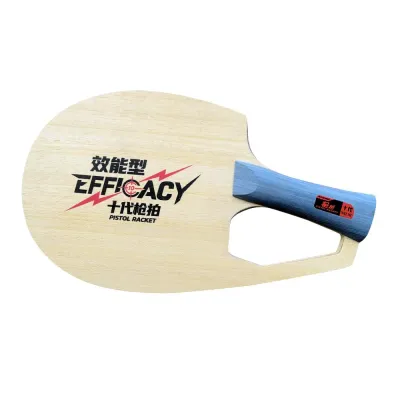
I had to look at the Sanwei Pistol Racket twice before I accepted it was a serious piece of equipment. The head is broader than the one on my usual blade, and below it the wood spreads into a wide frame with a blue handle running diagonally across the face and a hole cut through it for your fingers. Nothing about the outline looks like a table tennis blade.
Underneath the shape it is a 5+2 outer-ALC offensive blade with a right-handed, offset handle. Instead of gripping a straight handle below the blade face, I pushed my fingers through the opening and braced the lower frame against my palm. It felt closer to picking up a power tool than a racket.
I couldn’t leave it at that. Twenty years of Sanwei building these things says somebody keeps buying them, and I wanted to know what a fixed hand position actually does to strokes I have hit the same way for years. I tested the Froster version for more than four hours with Sanwei Target Europe Soft in 2.1mm on both sides.
The Sanwei Pistol Racket looks absurd. It is a blade with a hole cut through it and a handle laid across the face, and I went to my first session expecting to be laughed at. Instead I got a stable racket angle, dependable blocking and firm contact without squeezing the handle, and the 5+2 Froster construction has enough pace for an attacking game.
What let it down was the fit. Sharp inner edges forced me away from my natural position, and I missed the wrist and finger freedom of a conventional handle. Those compromises outweighed the extra stability for me.
Perfect for: Intermediate and advanced players with three or more years of experience who use compact strokes and want a fixed racket angle for blocking and close-table attack.
Recommended Playstyles
I can see the Pistol working for a controller or close-to-the-table attacker with compact strokes. It keeps the racket face steady and asks for less grip pressure, although players who rely on wrist and finger changes will give up some freedom.


Not sure which playstyle fits you?
Free 2-minute quiz with personalized equipment picks.
Why Pistol-Grip Blades Exist
Pistol-grip table tennis blades have existed in different forms for decades. The offset handle brings the likely contact area closer to the line of the forearm and puts part of the hand behind the blade rather than below it.
Sanwei has been developing its own pistol rackets for more than 20 years. The blade I tested is the tenth-generation design built around the Froster ALC construction.
The reasoning behind this design became clear in my hand. The diagonal handle puts my palm behind the blade, while the lower wooden section provides a second contact point that resists twisting. I didn’t need as much finger pressure to keep the racket face steady on a block or drive.
The contact also felt direct because my hand sat close to the area where I struck the ball. I couldn’t separate that sensation from the firm outer-ALC construction, so I wouldn’t assign a power gain to the handle alone.
A more fixed position can help with repeatability, and it changed the direction of my backhand in a useful way. It can also compensate for a technical habit without correcting it. In my case, I suspect the handle covered for how little I use my wrist on some backhands.
The trade-off is movement. A shakehand grip lets me alter the angle with my thumb, index finger and wrist. The Pistol gives me a more defined position with less room for those small changes.
Design of the Sanwei Pistol Racket
The blade arrived in a clear plastic shell with a black tray cut to its outline. The packaging needs the extra width because the handle runs across the lower part of the blade rather than extending straight down from it.
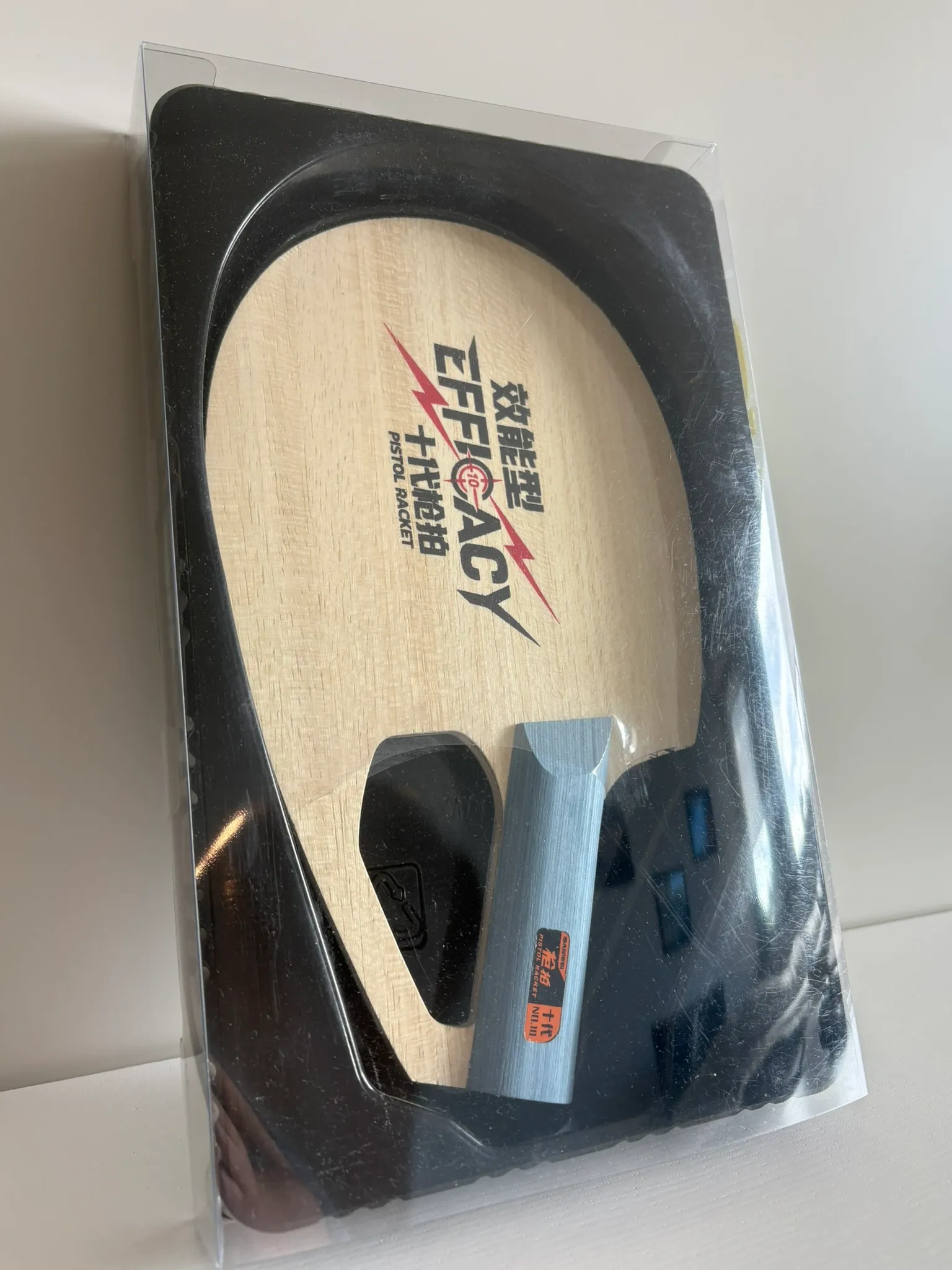 The shape needs its own packaging before you even get to the table.
Construction and Plies
The Pistol is a family of blades rather than one blade, and the code on the box is what you actually choose between. The outline, the handle and the palm support are identical across the range. Only the plies underneath change.
Sanwei sells four structures:
- QS1: seven wood plies, 90g, 6.1mm, rated all-round OFF.
- QS2: five wood plies with two hard carbon layers, 90g, 5.8mm, rated OFF+.
- QS3: five wood plies with two ALC layers, 88g, 6.0mm. This is the one I tested. Sanwei labels it OFF++, but it played as an OFF+ blade for me.
- QS5: nine wood plies with eight carbon layers, 92g, 6.2mm, the heaviest and fastest of the set.
The numbering skips 4, so do not go hunting for a QS4.
The one I tested uses five wood plies and two arylate-carbon layers. Koto sits on the outside, with ALC below it, Ayous further in and a Kiri core.
The dark composite layers are easy to see along the edge. The arrangement is shared with the regular Froster, but putting the handle and palm support into the blade changes how that construction feels in play. Our Sanwei Froster EX-C review covers the conventional version.
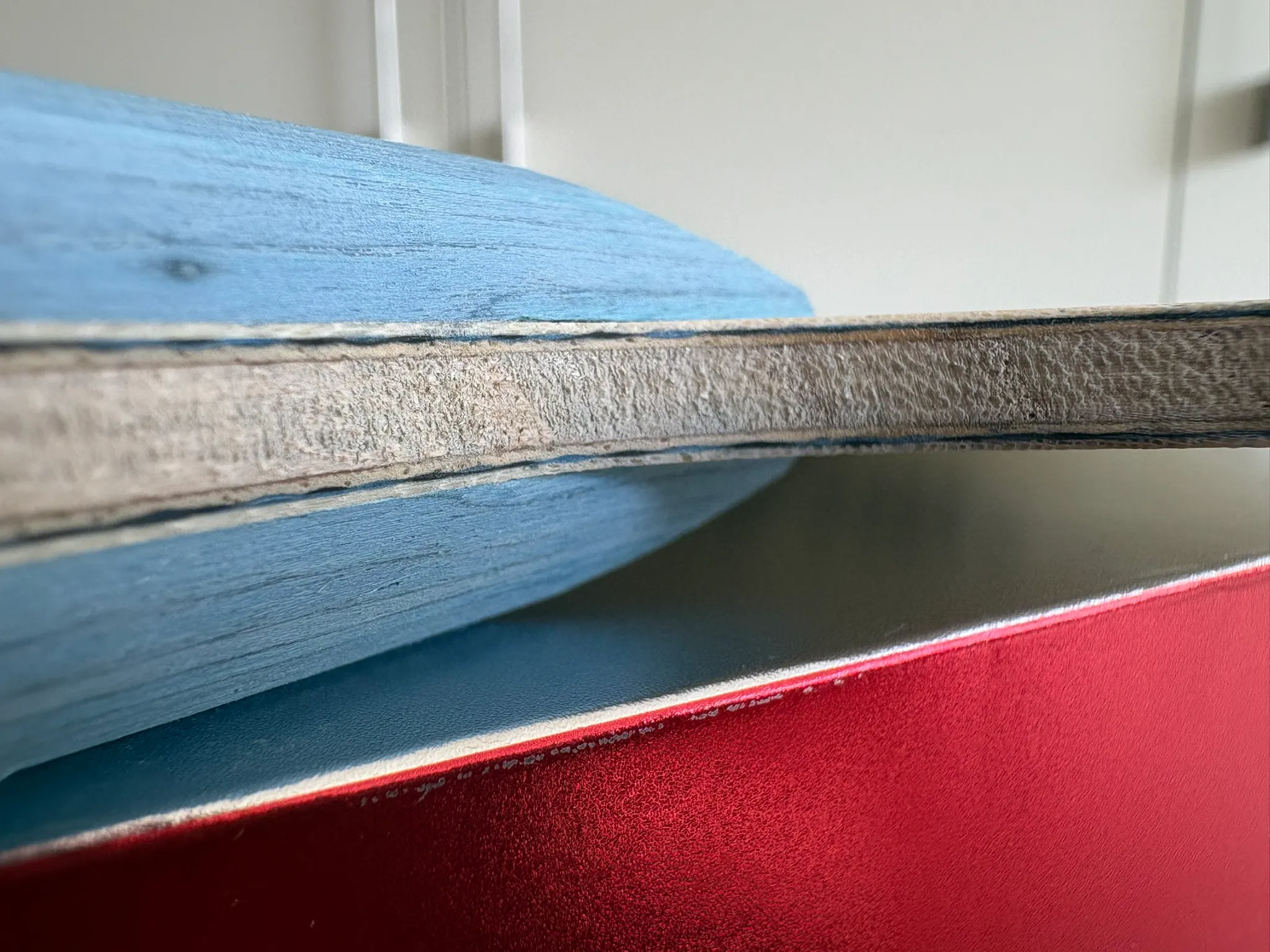 The familiar Froster layers sit inside a much less familiar outline.
Players comparing constructions can read our guide to all-wood and carbon blades.
Weight and Balance
The Pistol looks much larger than a standard blade when they are placed beside each other, and the difference shows up in two places. The head itself is wider, closer to a rounded teardrop than the oval on my Sanwei Multilayer C. Below it, the wooden frame extends further again to carry the handle and support my palm.
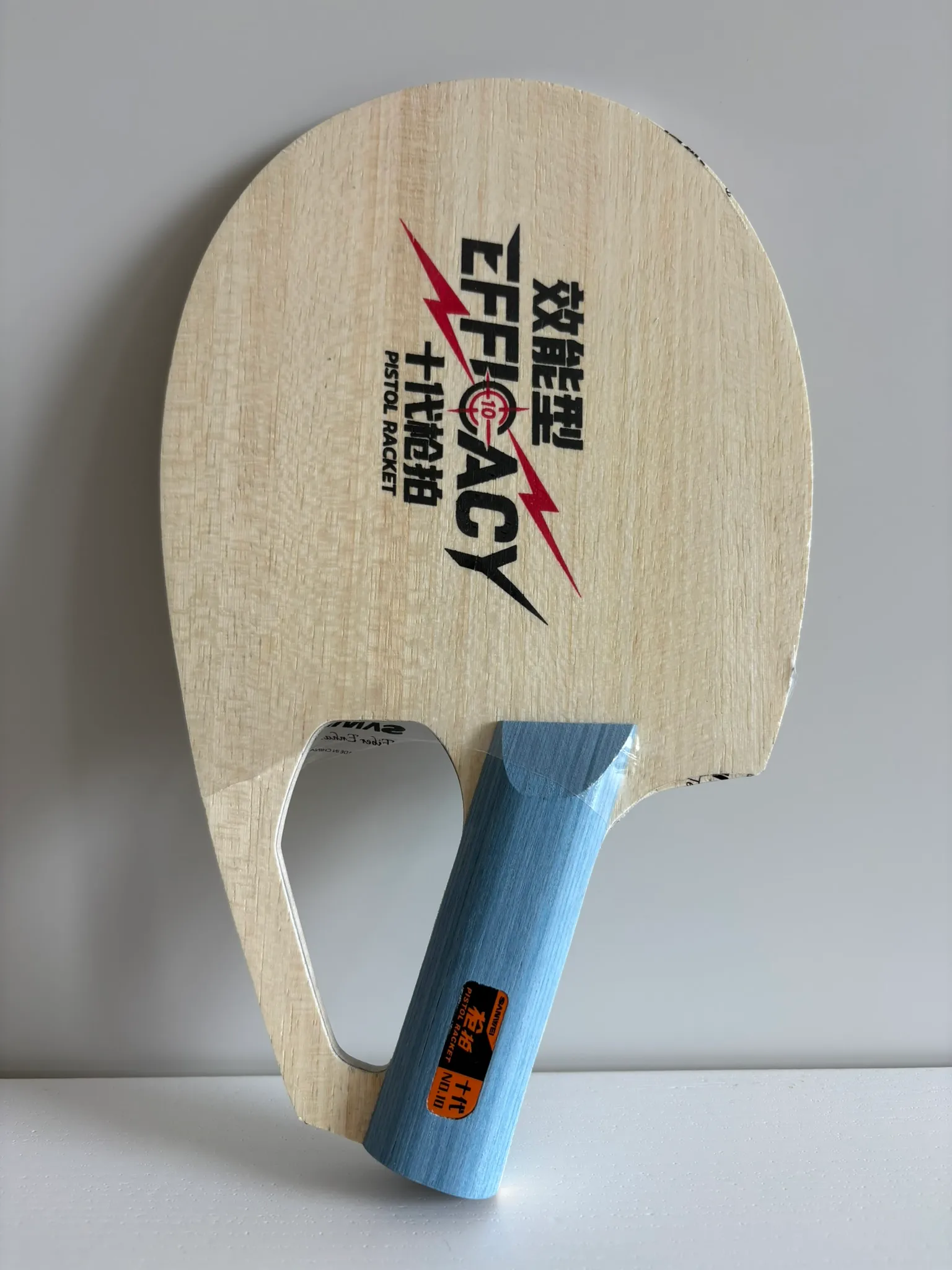 The handle places my hand close to the middle of the playing surface.
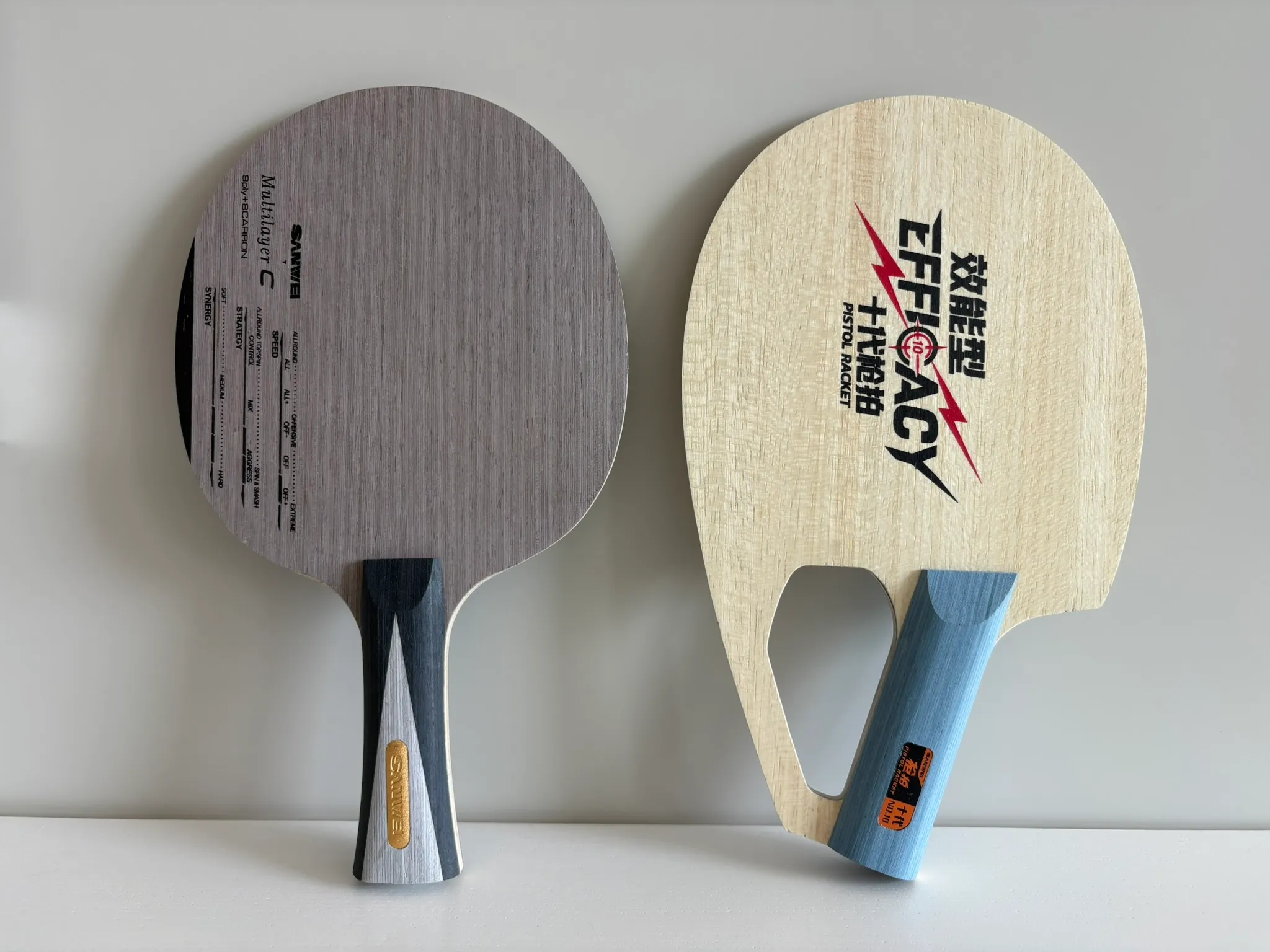 The comparison shows how much wood is devoted to the grip.
The rubbers only cover the round head, so I did not need more than one sheet per side. Even so, I found it strange to hold a blade where so much of the outline could never contact the ball.
Handle and Finish
The blue handle runs diagonally from the lower edge toward the center of the blade. My sample is shaped for my right hand, with my fingers wrapping through the opening while the base of the handle and surrounding frame sit against my palm.
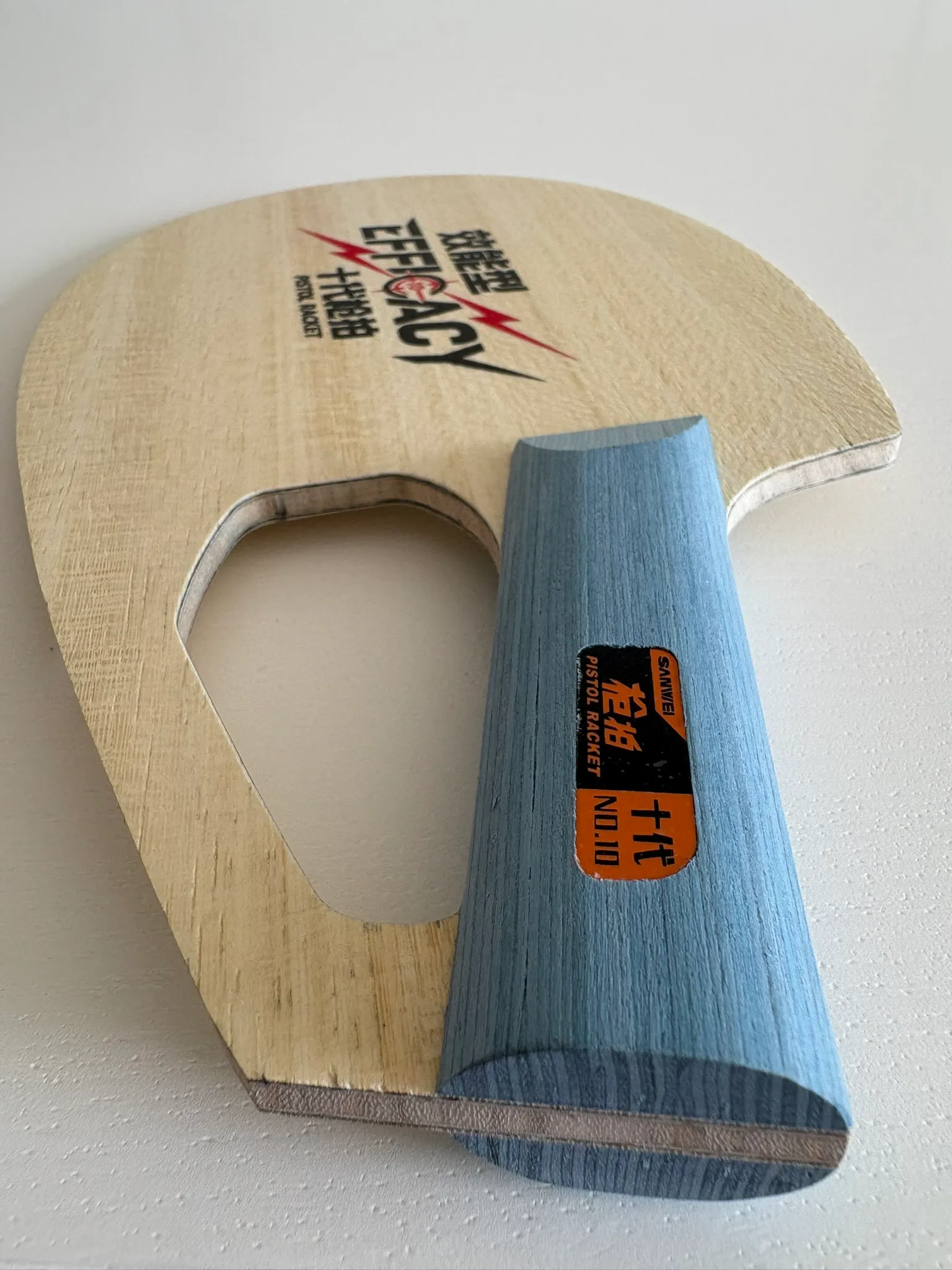 The handle is part grip and part brace.
The handle dimensions matter more here than they do on a conventional blade. I could move my hand slightly, but the finger opening and palm support still decided where most of my hand had to sit.
Sanwei’s current Pistol range includes slimmer FL and thicker ST handle options after feedback about grip thickness. My Froster sample has the older blue handle shown here, so I cannot say how much those newer choices improve the fit.
Honestly, the finish around that opening is the weakest part of my sample. My natural grip pressed my fingers against sharp exposed edges near the top of the cut-out and the lower shoulder.
I shifted my hand until those points stopped digging in. The modified position was usable, but it moved me away from the grip that the shape first encouraged.
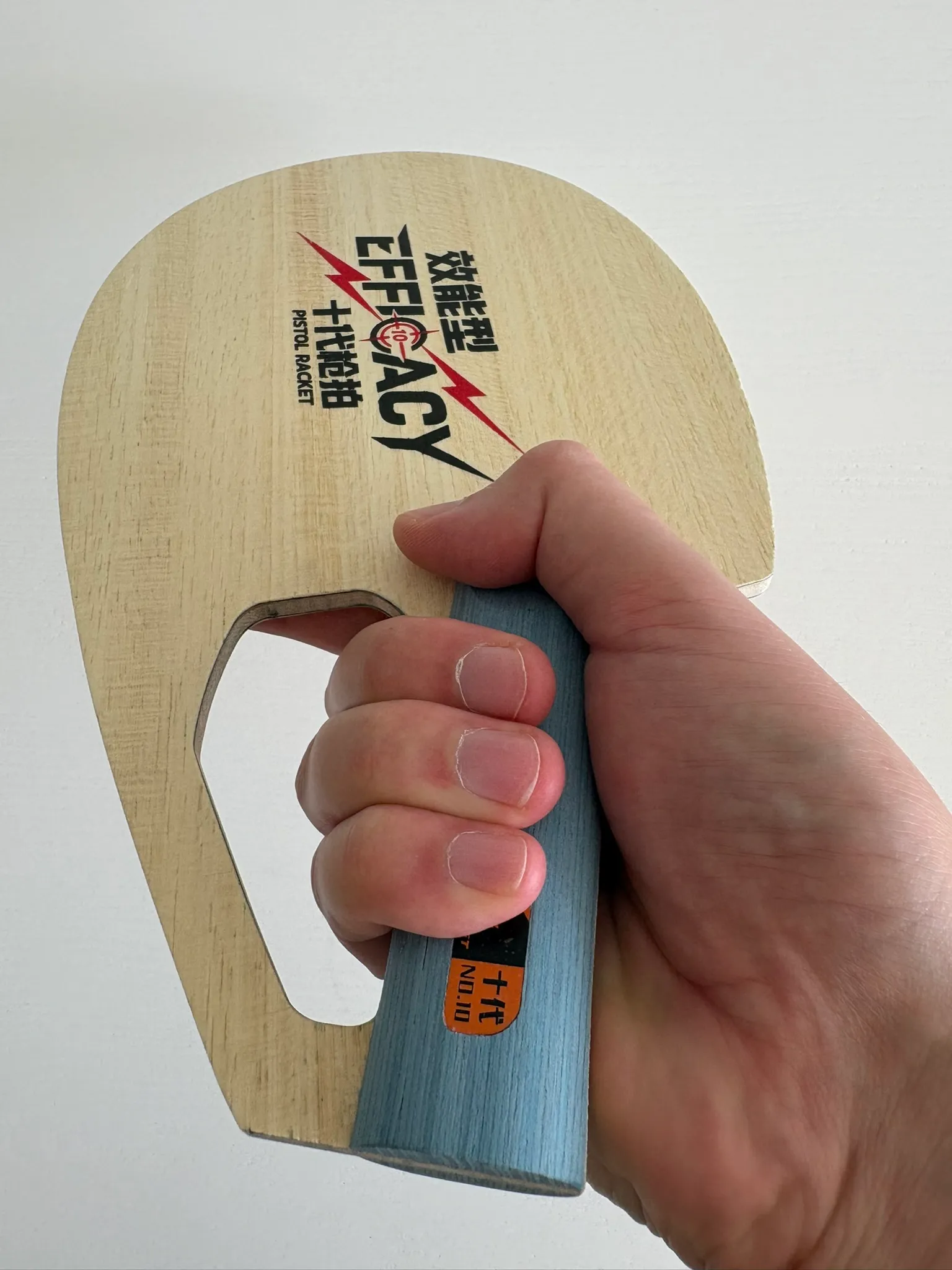 My fingers land close to the inner edge, which is where the finish started to bother me.
I would sand those contact points before playing another long session. A blade built around its handle should arrive with every edge that touches the hand properly rounded.
I didn’t need to squeeze the handle hard during blocks and drives. The sharp edges worked against that benefit, and my test was too short to judge any long-term effect on wrist or hand fatigue.
Competition Use
The unusual outline does not automatically make the Pistol illegal. Under the Laws of Table Tennis, a racket can be any size, shape or weight as long as the blade is flat and rigid. At least 85% of its thickness must be natural wood, and any reinforcing fiber layer has strict thickness limits.
Individual blades are not authorized by the ITTF in the same way as racket coverings. The finished racket still needs legal, currently authorized rubbers applied to the areas used for striking the ball.
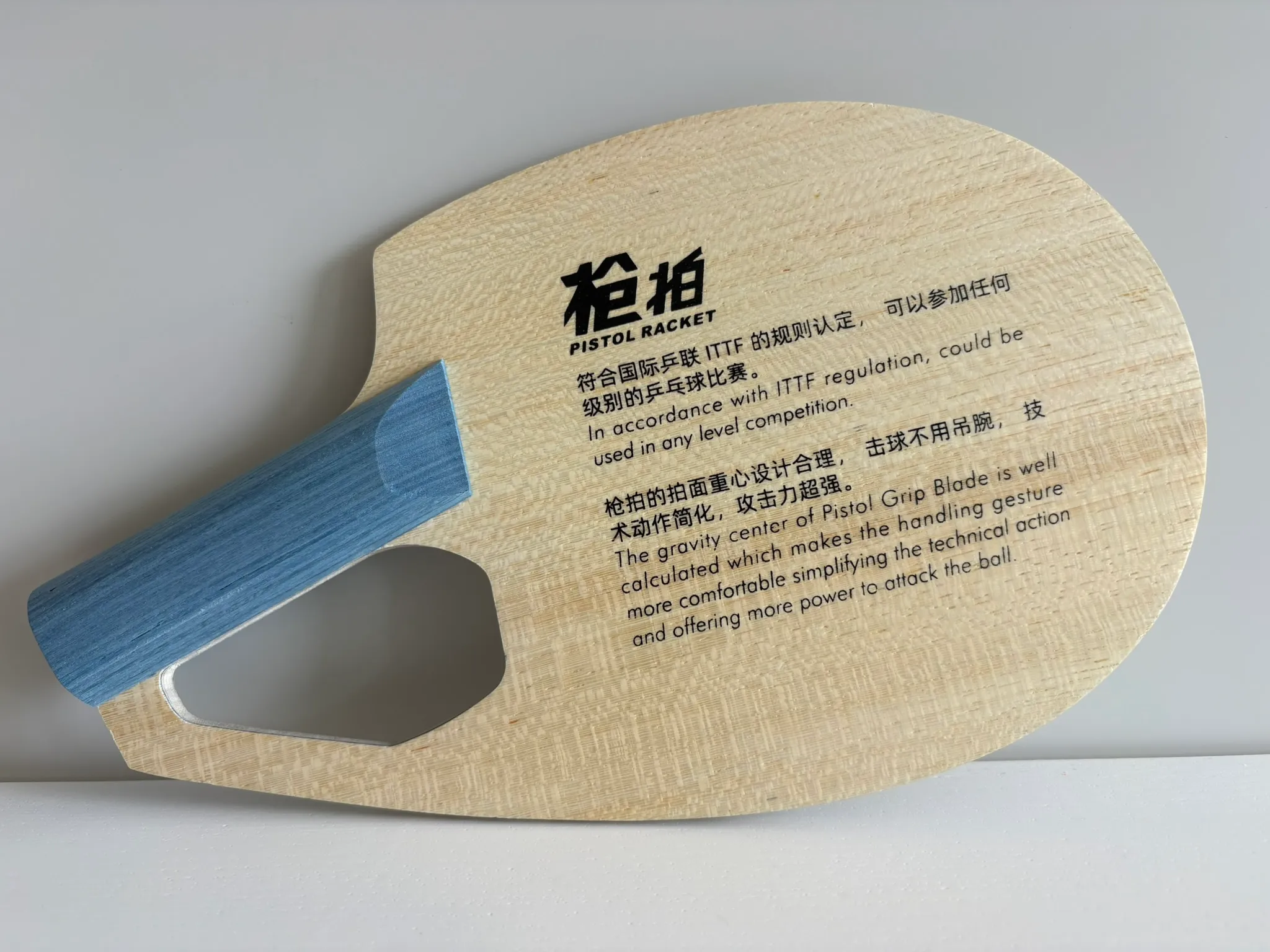 Sanwei prints the competition claim on the blade, but the finished racket still has to meet the rules.
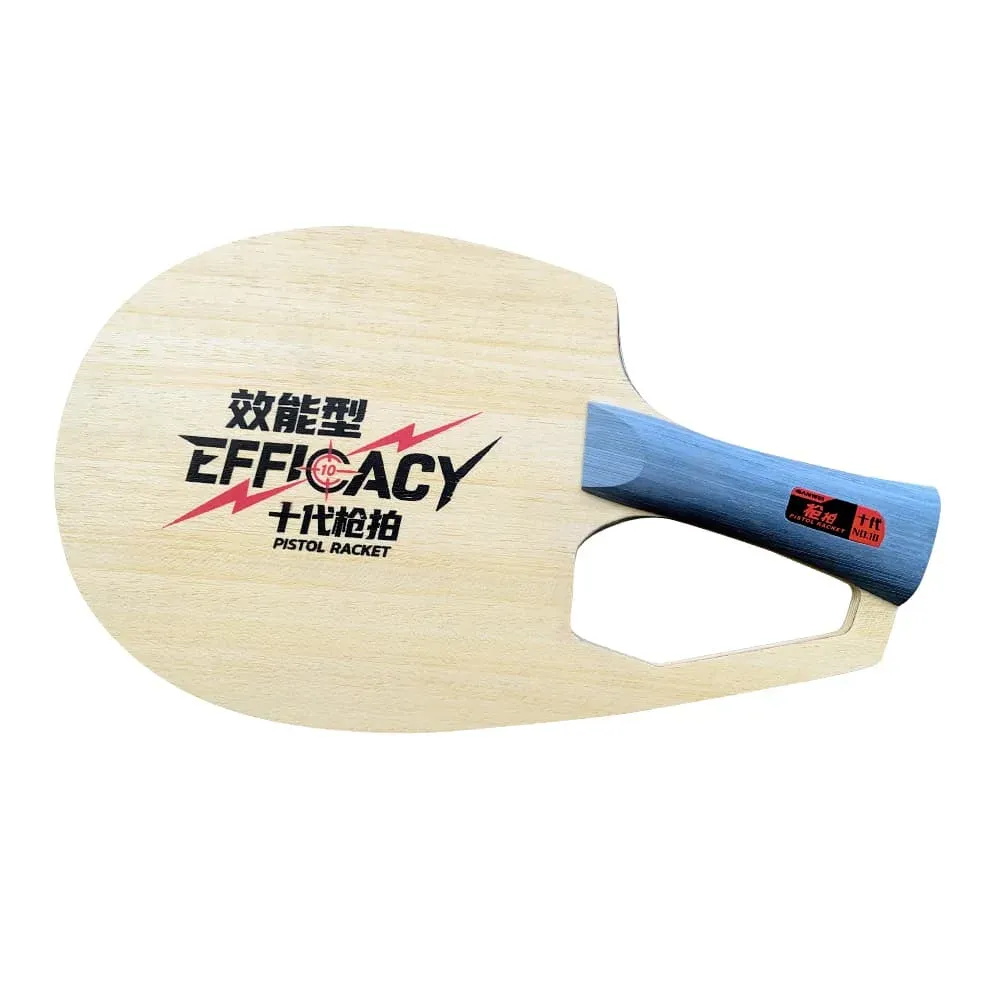
Sanwei Pistol Racket
A 5+2 ALC blade with an offset grip that gave me a stable racket face and firm contact, while reducing the finger and wrist movement I normally use.
Readers save 5% at Sanwei with code racketinsight5. Excludes items already on sale.
Playtesting the Sanwei Pistol Racket
I fitted Sanwei Target Europe Soft in 2.1mm on both sides. Using the same soft rubber for forehand and backhand removed one variable, although the firm Froster construction and unusual grip still affected the same contact.
The Froster base gives the racket a firm, quick contact. Target Europe Soft added dwell and a higher arc, which made the setup easier to control while I learned where the handle wanted my hand.
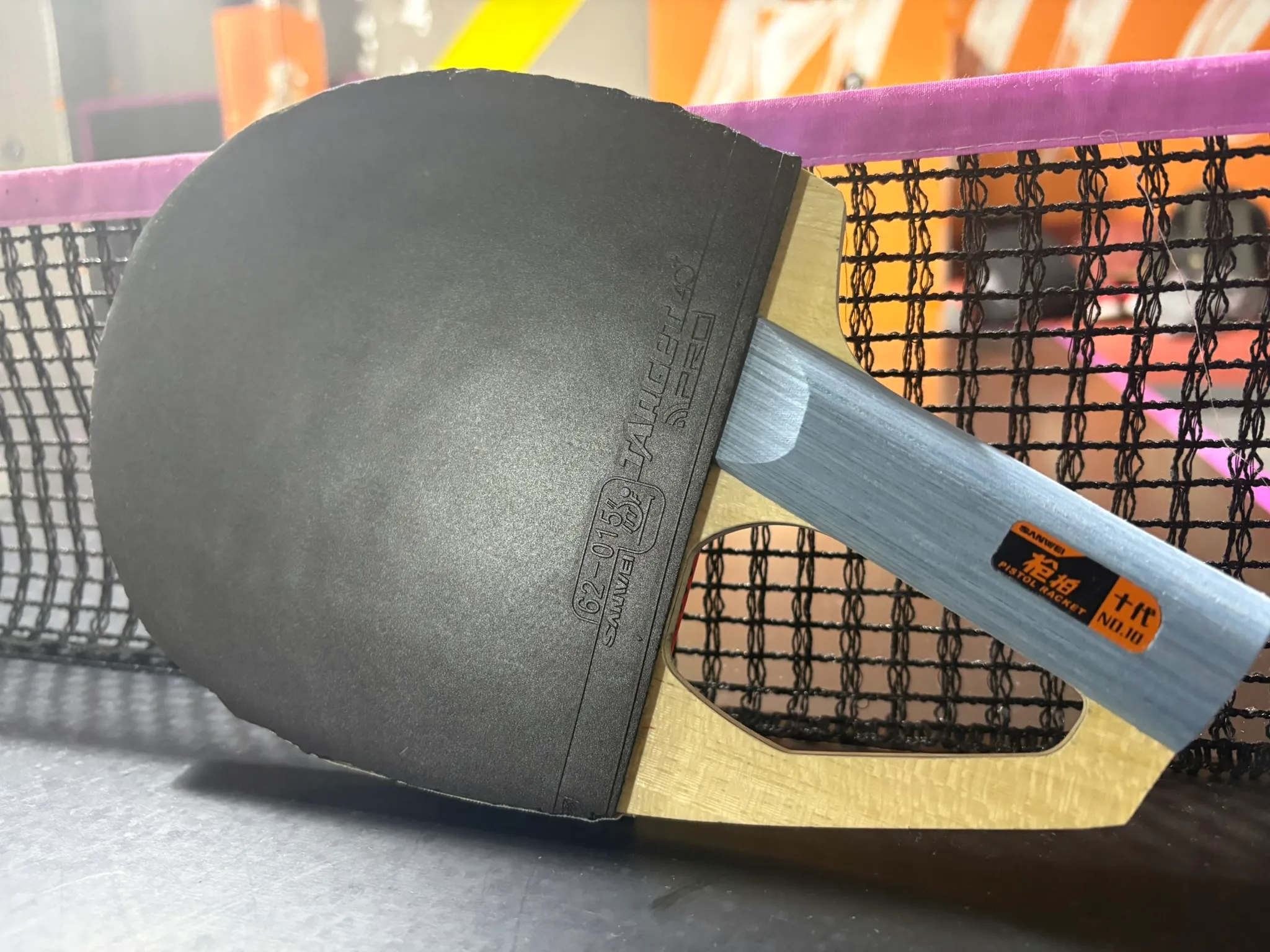 Only the round head is covered, leaving the palm support bare.
Serving and Returning
Serving was reasonably controlled once I chose a hand position. The firm Froster contact gave me a clean response, while the soft rubber let me brush the ball without the setup feeling too lively.
The grip reduced some of the wrist freedom I normally use to disguise placement and spin. I could still serve effectively, but changing the racket angle late in the motion took more effort.
On receive, the stable face helped with short pushes and backhand returns. Flicks and touch changes felt more restricted because I couldn’t shift the blade as freely in my fingers.
Driving and Looping
The underlying Froster blade has enough pace for an offensive game. Drives came off firmly, and the palm support kept the racket from turning when I met the ball in front of my body.
My forehand felt strongest when I committed to the stroke and swung through the ball. The contact felt direct on a full drive, although I missed the small finger adjustments I normally use to close the racket face.
My backhand was the surprise. I normally pull some shots to my right, but the Pistol sent more of them toward my intended line. I suspect the fixed handle angle compensated for how little I involve my wrist on that stroke.
I treat that as compensation rather than proof that the grip improved my technique. A player with a settled backhand angle may find the same fixed position restrictive.
Looping was capable from both sides, helped by the pace of the ALC construction and the softer rubbers. I had to prepare earlier when the ball changed sides because the forehand/backhand transition needed a clearer movement in my hand.
Blocking and Chopping
Blocking was the Pistol’s strongest area for me. The palm support resisted rotation and helped me present a stable racket face against incoming topspin. Passive blocks felt secure, and I could redirect the ball without squeezing the handle.
Chopping exposed the limit of that stability. I wanted more freedom to open the racket face, soften the contact and use my wrist. The fixed hand position made that variation harder.
I could use the Pistol for occasional defensive shots, but I would not choose it for a game built around variation. It suits repeated, compact strokes better than frequent changes of angle and grip pressure.
Alternatives to the Sanwei Pistol Racket
Nothing here replaces the pistol grip. If the handle is what you are after, your only real choice is a different Sanwei Pistol construction. These three are for players who want this kind of blade without the shape, and the Froster EX-C is the closest match because it uses the same construction I tested.
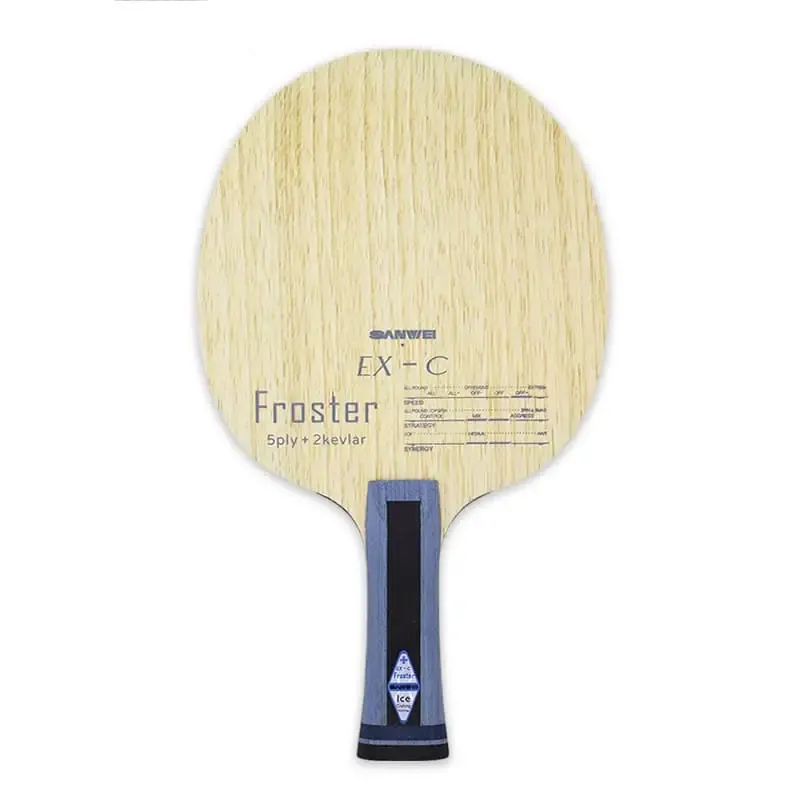
Sanwei Froster EX-C
The same 5+2 outer-ALC construction I tested, in a standard shakehand blade. The nearest match for this blade's pace and firm contact.
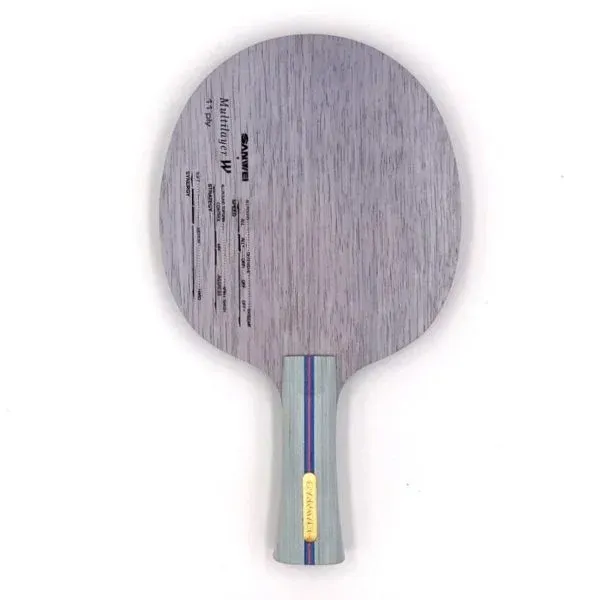
Sanwei Multilayer W
A slower 11-ply all-wood blade with a large sweet spot, for players who want more control than OFF+ carbon offers.
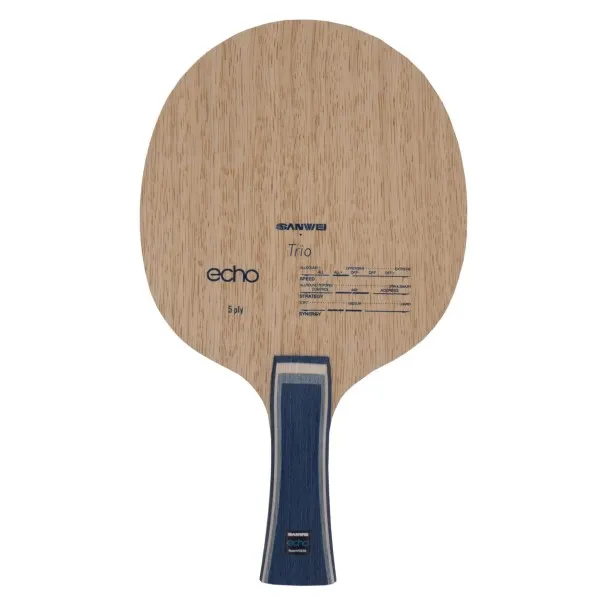
Sanwei Echo
A cheaper five-ply control blade for players who want predictable placement without a carbon layer.
Overall Impressions
For something that looks like a woodworking offcut, the Sanwei Pistol makes a clear case for putting more of the hand behind the blade. I used less grip pressure, the racket face resisted twisting and blocks felt secure against incoming pace.
The Froster construction also gave the setup enough pace to attack from close and mid-distance. That playing character comes from the 5+2 outer-ALC structure, while the fixed handle mainly changed how I supported and adjusted the blade.
I spent less effort keeping the blade steady and more effort getting my hand comfortable. The sharp edges forced a modified position, and the close fit left little room to escape those contact points. I also missed the wrist and finger movement I use for serves, touch shots and defensive variation.
I would recommend it only to a player who wants a more fixed racket angle for compact strokes and whose hand fits the opening comfortably. The design has a practical purpose, but it didn’t improve enough of my game to replace a conventional handle. Our guide to choosing a table tennis blade explains the more conventional decisions around speed, feel and construction.
Sanwei Pistol Racket
Readers save 5% at Sanwei with code racketinsight5. Excludes items already on sale.



Comments