There are 5 different ball ratings: Fun balls, training balls, 1-star balls, 2-star balls, and 3-star balls. As if that wasn’t enough, there are tens of brands to choose from.
Given this variety of options, one may find it hard to choose the correct table tennis ball.
We have designed this guide to help you pick the best table tennis ball for your particular needs. In addition, we aim to clear all your doubts regarding the ping pong ball so you can make your decisions confidently.
The official rules of the table tennis ball
The current table tennis ball must comply with 3 main rules, as per the ITTF Handbook, annex 2.3:
- The ball shall be spherical, with a diameter of 40mm.
- The ball shall weigh 2.7g.
- The ball shall be made of celluloid or similar plastics material and shall be white or orange, and matt.
All these rules apply to table tennis balls that want to apply for ITTF certification.
If you wanted, you could play with any ball, but you would not be complying with the official standards of professional table tennis.
Some leagues in Japan play with 44mm balls, and the game seems to be a lot of fun too.
However, if you want to play proper table tennis, you should follow the ITTF handbook, which contains all the rules of table tennis.
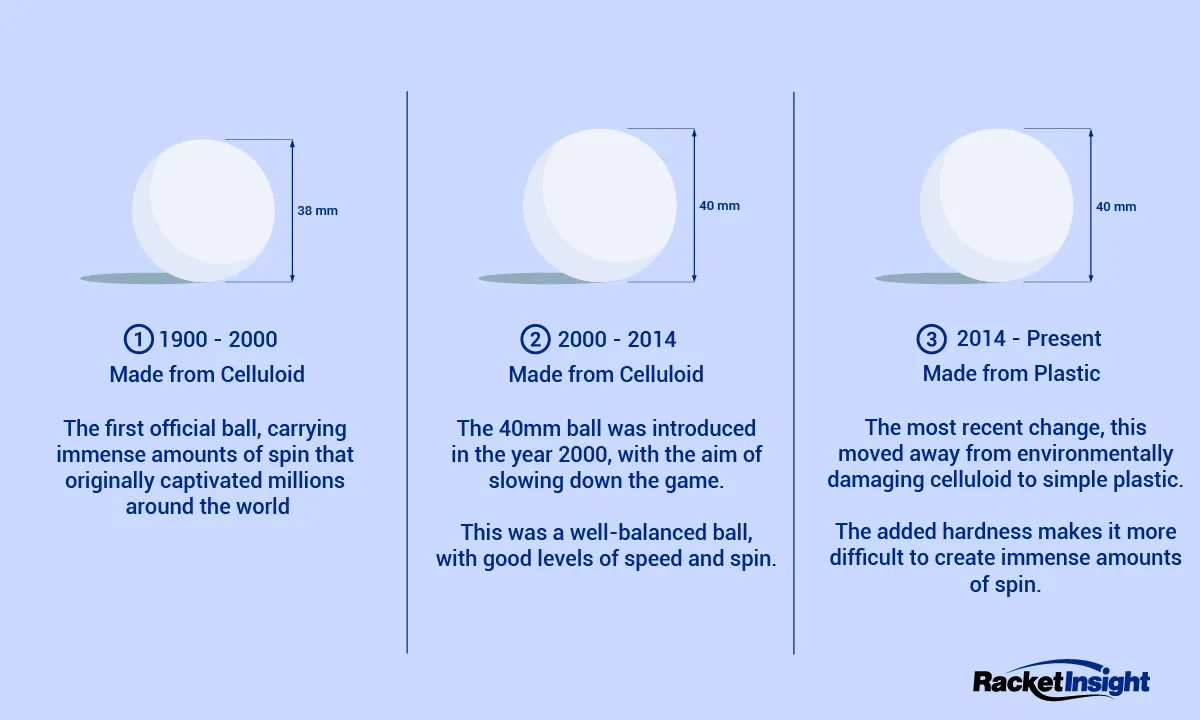
The material of the current ball is plastic.
After 114 years of use, the celluloid ball was discontinued in 2014 due to environmental concerns, as celluloid is a dangerous handle material and extremely flammable.
Here is a brief overview of the history of the table tennis ball.
Which table tennis ball is best?
Now that we know which rules a table tennis ball must comply with, we are going to recommend to you the best table tennis balls.
In table tennis, there are five qualities of balls: fun balls, training balls, 1-star balls, 2-star balls, and 3-star balls.
The best balls on the market are 3-star balls, but they are also the most expensive. You don’t necessarily need to play with these balls, but they are much better than the others.
Because of this, the 3-star balls are the ones used in all international tournaments, such as the Olympic Games or the World Table Tennis Championships.
Any ITTF tournament uses 3-star balls from the most reputable table tennis brands. For example, the Olympic Games ball was of the DHS (Double Happiness) brand.
Next, we are going to review all the table tennis balls one by one and explain their characteristics, starting with the fun/novelty balls.
Fun/novelty table tennis balls
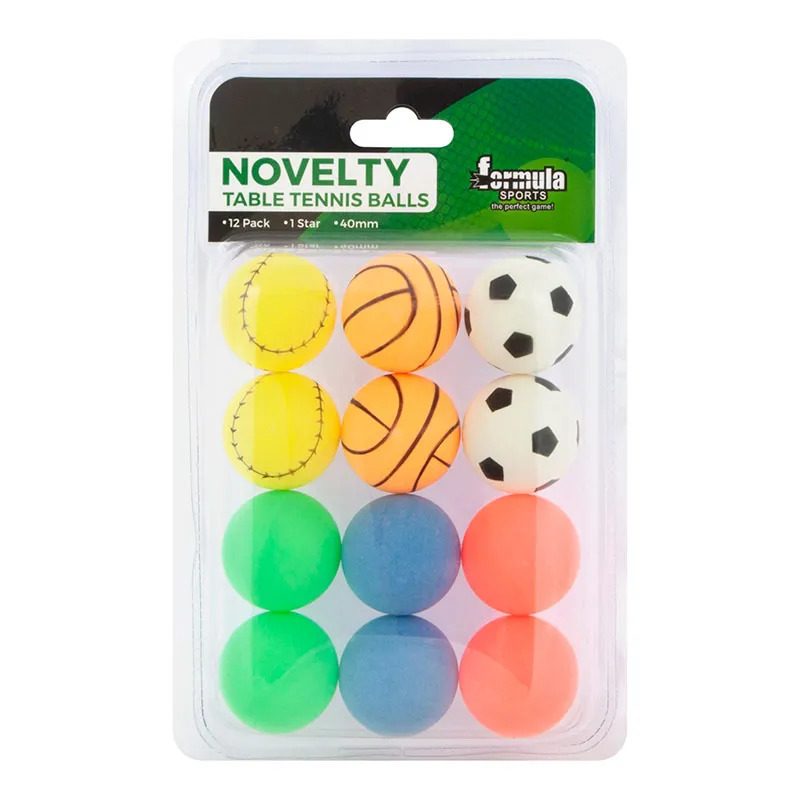 Photo: Poolroomsupplies
These balls can be purchased at regular sports shops and supermarkets. Balls of any brand other than the most trusted Table Tennis brands are also considered novelty balls.
As the name implies, these balls are used to play for fun, and they aren’t nearly as good as real table tennis balls.
They are usually very light, soft, break easily and they’re typically not round at all.
We recommend that you do not purchase these balls under any circumstances. The bounce is not uniform at all and they feel terrible when hitting them.
If you want to have consistency in table tennis, you have to use real table tennis balls.
But what about the price? If you want to buy cheap table tennis balls, training balls cost about the same and there is a huge quality gap between training balls from a reputable brand and novelty balls.
Training balls
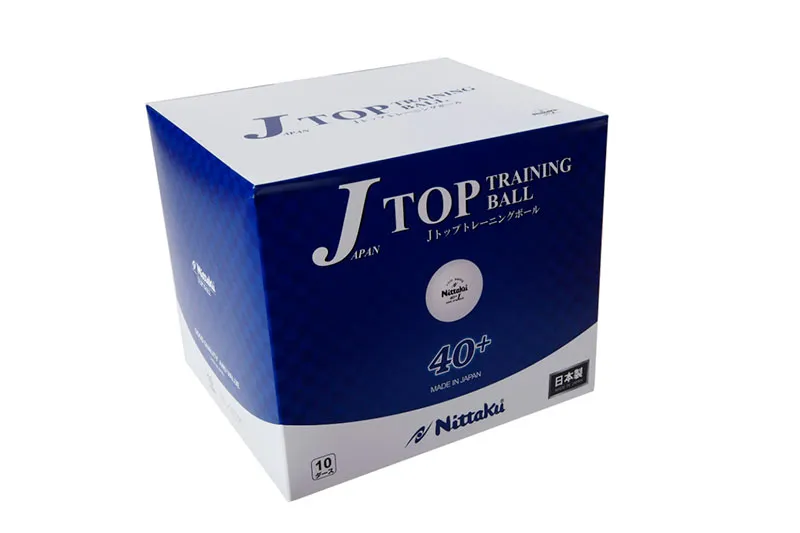 Photo: Tabletennis11.com
Training balls are of a completely different quality than fun balls. The biggest gap in quality between two ball quality tiers is between fun balls and training balls.
These balls do not reach the quality of 1-star balls, but their goal is to be good enough so that table tennis players can train with them without problems.
These balls have the weight, diameter, and feel that the competition balls have, but for one reason or another, they do not have the same quality as 1-star balls.
They are used predominantly for multi-ball training or robot training since it’s pretty cheap to buy lots of them. They’re perfectly fine for training, but they aren’t good enough for serious play.
We recommend these balls for those players who:
- Do multiball training periodically.
- Practice with a robot.
- Don’t want to spend a lot on table tennis balls and want balls that are good enough for casual play.
1-star balls
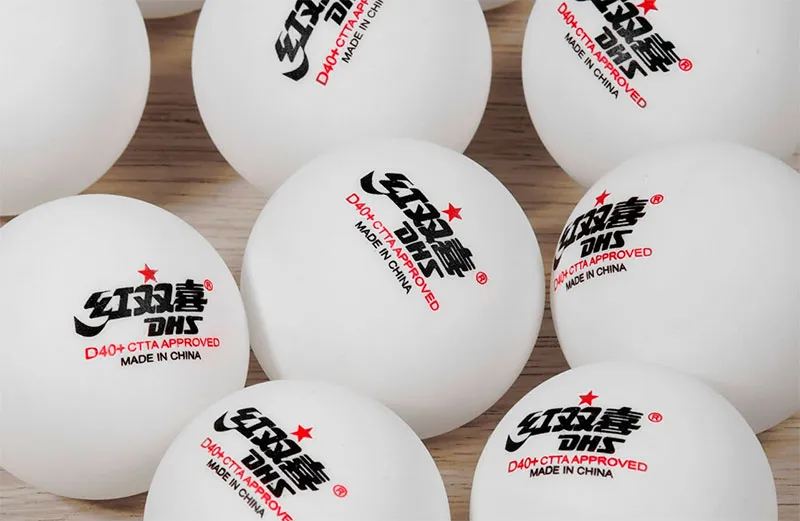 Photo: Tabletennis11.com
One-star balls are probably the most popular table tennis balls. They are good enough for regular use.
The DHS 1-star balls, pictured above, are approved by the Chinese Table Tennis Federation. As we can see, these balls have enough quality to be approved by national entities.
Most of these balls are of good enough quality to train with and they’re also good for playing matches or local tournaments.
However, many of these balls come in a slightly oval shape, which is why they are one-star instead of a higher denomination.
In my opinion, they are the best value for money, as they offer good enough quality at a fairly cheap price.
We recommend these balls for those players who:
- Want cheap, high-quality balls.
- Want very high-quality balls to use in multiball or robot training.
- Want to train and play matches regularly without spending too much on table tennis balls.
2-star balls
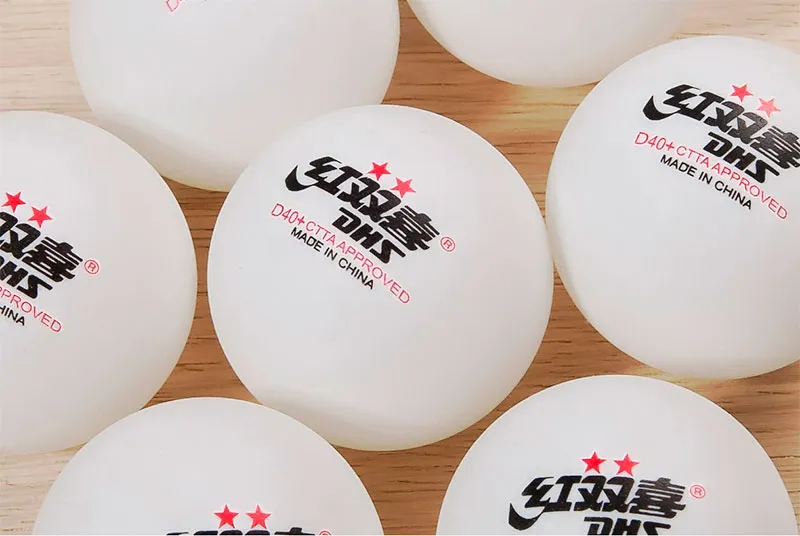 Photo: Tabletennis11.com
These are the rarest balls to find. In my entire playing career, I am yet to see a 2-star ball.
These balls fall between the 1 and 3-star balls, but they are not common since most players who want to spend less money buy the 1-star ones, and those who want the best balls to play with buy the 3-star ones.
Hardly anyone ends up buying the 2-star balls because they are not as good as the 3-star ones nor as cheap as the 1-star ones.
However, they can be a good option if you want high-quality balls but you don’t want to pay a premium for 3-star ones.
We recommend these balls for those players who:
- Want a high-quality ball for less money.
- Want tournament balls that are better than 1-star balls but don’t cost as much as 3-star balls.
- Want a leap in quality compared to 1-star balls.
3-star balls
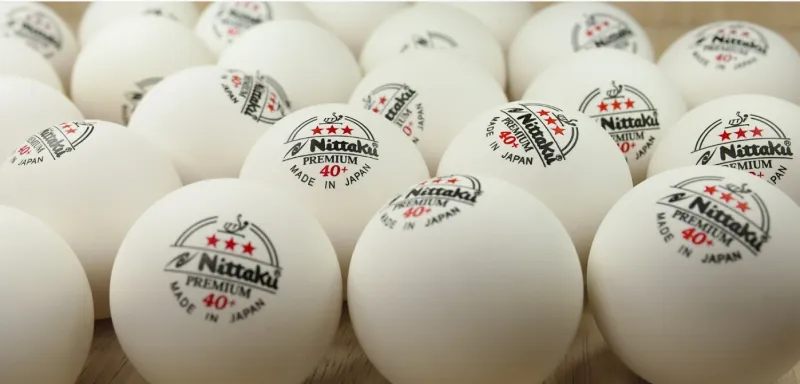 Photo: Tabletennis11.com
These balls are the best of all, and they are a pleasure to play with. This is especially true for those offerings from the most reputable brands. My personal favorites are Nittaku balls, and in second place, DHS balls. Virtually all of the 3-star balls are ITTF-approved.
We’ve recommended our favorite 3-star table tennis balls. The DHS DJ40+ is at the top of that list.
Most tournaments are played with 3-star balls, as they are the ones with the most consistent bounce and the ones that feel the best when using them.
They cost quite a bit more than 1-star balls, but they are 100% worth it. The difference is very noticeable for experienced players, but if you are a beginner, you may not notice any difference between the lower-quality balls and these.
We recommend these balls for those players who:
- Want the best possible quality.
- Want to enjoy the ball they use.
- Want to host tournaments.
What table tennis ball should I buy?
We have created a chart showing the ideal ball for every situation.
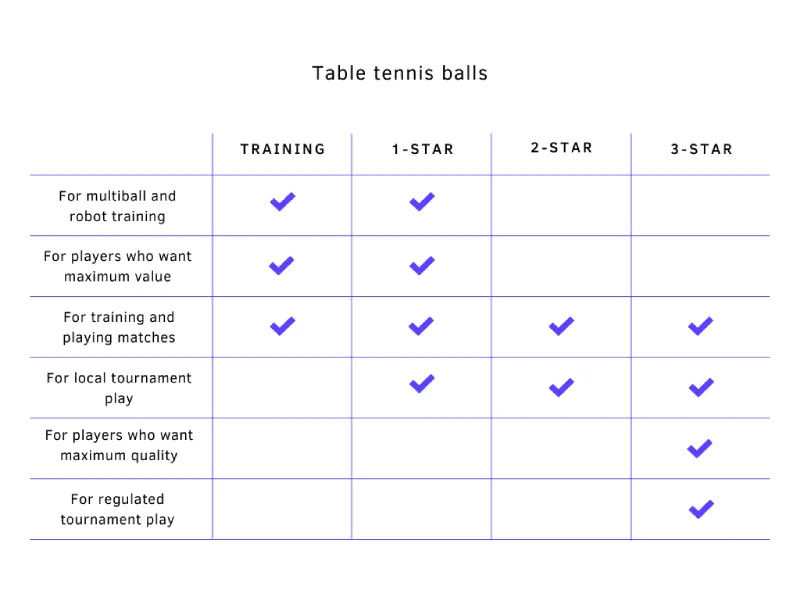
| Use case | Training | 1-Star | 2-Star | 3-Star |
|---|---|---|---|---|
| For multiball and robot training | Yes | Yes | ||
| For players who want maximum value | Yes | Yes | ||
| For training and playing matches | Yes | Yes | Yes | Yes |
| For local tournament play | Yes | Yes | ||
| For players who want maximum quality | Yes | |||
| For regulated tournament play | Yes |
As you can see, the ideal ball to use depends on what you want it for.
Frequently asked questions
Table tennis balls are quite a complex topic. Balls come in very different shapes, qualities, and colors, depending on the manufacturing process used.
To clear all the doubts you may have, we have created a short FAQ section.
What does 40+ mean on table tennis balls?
The reason for the 40+ inscription is that, when the celluloid ball was in place, there was a tolerance of 0.4mm. 40mm celluloid balls could fall between 39.6 and 40.4mm in diameter.
Since the production of table tennis balls is carried out on a very large scale, manufacturers wanted to get as close to the lower limit as possible to save costs, and thus most celluloid balls were closer to 39.6mm than to 40mm.
When the ITTF introduced plastic balls, they asked the manufacturers to make the balls 40 millimeters or larger, that is why the plastic balls are said to be bigger, hence the inscription 40+.
The smallest approved plastic ball is 40mm in diameter. It can be a bit bigger, but not smaller. Hence the inscription 40+ (40mm or more, up to 40.4mm)
Which table tennis balls are best?
The best table tennis balls are the 3-star offerings from reputable brands, such as Butterfly, DHS, and Nittaku.
However, this does not necessarily mean that those are the balls you should buy.
If you are going to practice with a robot and you need 100 balls, you will hit each ball only once per cycle, so the difference in bounce between a training ball and a 3-star is not worth the price.
For certain situations, it is much more logical not to buy the 3-star balls because they are much more expensive.
Is there a difference between table tennis balls?
There is a huge difference between balls of different quality tiers.
I find that when I buy 10 1-star balls, practically all of them are slightly oval but perfectly usable and 1 or 2 have a pronounced oval shape.
When I buy 3-star balls, most are perfectly round and some are slightly oval. In addition to the more even bounce, 3-star balls also feel much better when you hit them.
How can you tell if a table tennis ball is good?
The easiest way to tell is by spinning it and seeing if the ball wobbles. If it does, then it's oval, and it's no good.
You can also tell if a ball is very worn out or if it’s a low-quality ball when you play with it.Ç
A poor-quality ball will feel light and flimsy, whereas a good-quality ball will feel heavier and more stable.
Are white or orange balls better?
For certain circumstances, white balls are better, and for others, orange balls are better.
It all depends on the color of the background. Many clubs will have white walls, so orange balls are better. You can’t play with white balls on a white background because you won’t be able to see them properly.
Why orange and not another color? Because that is what the ITTF handbook stipulates.
White balls are widely used and we recommend that you use white balls if the walls aren’t white because these balls are the most popular ones and thus the ones you’ll use most often.



Comments